


HSS Milling Cutter Mastery: How to Maximize Life & Performance in Slotting, Profiling & Finishing
In the demanding world of precision machining, your choice of milling cutter can make or break profitability. For many job shops and contract manufacturers working with mid-to-high mix batches, the right cutting tool can mean fewer tool changes, better surface quality and lower cost per part. Among these tools, solid high-speed steel (HSS) cutters remain a versatile and cost-effective choice for those who understand how to unlock their potential. In this article, we explore how to use HSS milling cutters—especially those in slotting, profiling and finishing operations, with the best geometry, coating and process control to deliver life and performance that rivals more advanced materials.
Why HSS Still Matters in Milling
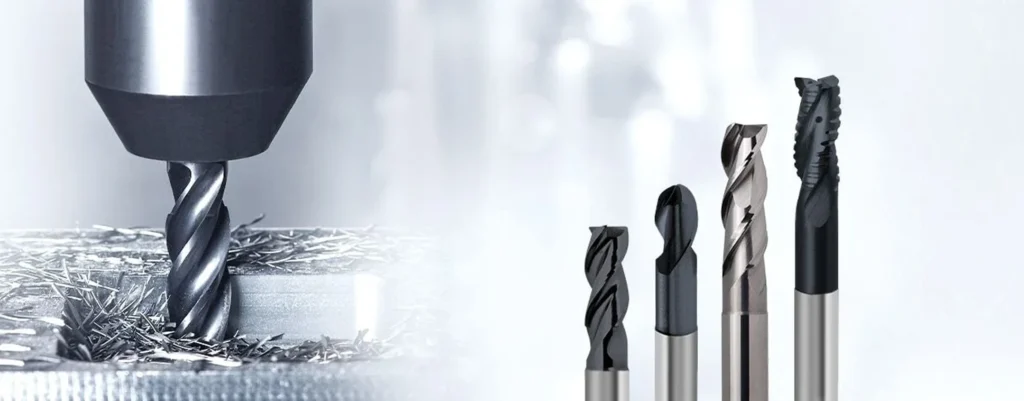
Though carbide and polycrystalline diamond (PCD) cutters dominate many high-volume applications, HSS cutters continue to hold a strategic place—especially for small to medium runs, easy to regrind tools and versatile setups. HSS offers:
Excellent toughness: HSS retains hardness at high temperatures; as explained by one overview, “HSS retains its hardness at working temperatures of 600 °C, exceeding ordinary tool steel by about 400 °C.
Cost-effectiveness and repairability: Many shops value HSS for its ability to be re-ground multiple times and lower initial tool cost.
Good all-round performance for slotting, profiling and finishing: A well-matched HSS cutter can provide excellent finish quality and tool life without the premium cost of carbide.
Nevertheless, achieving top performance from HSS milling cutters requires meticulous attention to geometry, coating, substrate grade and process strategy.
Understanding HSS Tool Materials and Grades
Conventional HSS (M2)
M2 is the most widely used HSS grade. It offers a good balance of hardness, wear resistance, and ease of machining. Ideal for mild steels, aluminium, and cast iron, it provides consistent results at moderate speeds.
Cobalt-Enriched HSS (M35, M42)
Adding 5–8% cobalt enhances red hardness, allowing the cutter to maintain sharpness at higher temperatures. M35 and M42 excel in tougher metals such as stainless steel and high-strength tool steel, extending life under heat stress.
Powder Metallurgy (PM-HSS)
PM-HSS combines the fine-grain of powder processing with the toughness of HSS. These cutters offer superior wear resistance and consistent hardness, ideal for high-precision finishing in aerospace and mould steels.
Milling Cutter Geometry: Precision Matters
Flutes, Helix Angle and Number of Cutting Edges
When it comes to slotting or profiling, the number of flutes, the helix angle and overall cutter geometry must be chosen to optimize chip removal, rigidity and surface finish. A common principle: more flutes mean more cutting edges and potentially higher feed, but less room for chips and more heat buildup. For HSS cutters, that trade-off is especially critical. As one machining guide states: “More flutes allow a higher feed rate … but because the core diameter increases, there is less room for swarf, so a balance must be chosen.
A moderate flute count, often 4 or 6 for many HSS cutters, offers effective chip clearance while providing enough edge count for feed rate. Helix angle is also key: higher helix angles improve finish and reduce downward force, but may compromise rigidity in heavy cuts. For HSS slotting or plunge-profiling, a flute with a moderate helix (e.g., 30°) and a full-profile neck relief is a good base.
Geometry defines how an HSS milling cutter performs in real-world machining. Small geometry changes greatly affect tool life, finish, and vibration. The flute shape controls chip flow, while the helix angle manages cutting force and finish. For roughing, a lower helix offers better strength. For finishing, a higher helix creates smoother walls and fewer marks.
End relief angles also influence how the edge cuts without rubbing. Selecting the right geometry ensures stable cutting, lower wear, and reduced heat. Always match geometry to operation—slotting, profiling, or finishing. Geometry and rigidity together decide if an HSS cutter lasts or breaks early.
Cutter Diameter, Length-of-Cut & Stick-Out
Rigidity is arguably the greatest single factor controlling HSS cutter life. Because HSS is not as stiff as carbide, keep the cutter’s extension from holder to tip as short as possible, and avoid excessive stepping. For slotting/pocketing operations, choose the shortest length-of-cut that still accommodates the job. In finishing passes where surface quality matters, lean toward stub end milling with minimal stick-out and high precision holders.
Edge Preparation and Coating Compatibility
The sharpness of the edge, micro-radius and edge honing are significant in resisting chipping and achieving a good surface finish. For an HSS cutter, fine honing (0.02–0.05 mm) reduces the risk of premature wear and workpiece material welding onto the cutter. At the same time, if the HSS cutter carries a coating (e.g., TiN, TiAlN), the geometry must allow for coating thickness and adhesion without changing the effective cutting diameter in a way that degrades finish or tolerance.
Optimizing Feed, Speed, and Depth for HSS Cutters
Proper feed and speed are the lifelines of tool life. HSS, being less rigid than carbide, demands slightly lower surface speed but higher feed per tooth to maintain chip thickness and avoid rubbing.
- Surface speed (Vc): Typically ranges from 20–40 m/min for steels, and 60–90 m/min for aluminium alloys.
- Feed per tooth (fz): Should balance load and chip evacuation—too low causes rubbing, too high increases wear.
- Depth of cut (ap): For slotting, limit to ≤1×D; for finishing, 0.05–0.2×D works well.
Slotting, Profiling & Finishing: Application Strategies
HSS milling cutters deliver consistent results when each process is optimized. The cutting path, chip removal, and coolant flow must align with the cutter geometry. When set correctly, HSS can produce clean slots and fine surface finishes. Always manage feed per tooth carefully. Too high creates vibration, too low causes rubbing. Maintain coolant flow directly at the flute exit. This prevents chip welding and improves finish. HSS’s toughness allows smooth cutting even in interrupted paths. Slotting, profiling, and finishing each need a unique balance between feed, depth, and tool rigidity.
Slotting
Slotting with HSS cutters—especially in steels and cast irons—can be effective if the tool and process are optimized. Use moderate feed per tooth, shallow to moderate depths of cut (commonly 0.5 — 1.0 × D for HSS), and ensure coolant or lubrication to evacuate chips and reduce heat. Because slotting often creates large chips, flute geometry must allow evacuation; if chips stack, wear skyrockets. For interrupted cuts (e.g., profiling plunge-entry) HSS’s toughness makes it a smart choice over brittle carbide.
Profiling
When profiling contours, maintain constant engagement, avoid sudden entry/exit shocks and maintain high toolholder rigidity. For HSS, using trochoidal paths (if the machine allows) reduces average engagement and heat generation. Surface finish is critical in profiling; therefore, select cutters with polished flutes, good coating, and optimal helix to reduce scallop marks.
Finishing
Finishing passes with HSS cutters require the lowest tool deflection, best geometry and often higher spindle speeds within the HSS limits. Use shallow depth of cut (e.g., 0.1 × D), high feed per tooth and aim to minimise idle time. Because finishing doesn’t remove large volumes, HSS’s fine edge retention and modest cost (versus carbide) can make it attractive in small-run precision finishing.
The Role of Coolants and Lubrication in HSS Milling
Flood Cooling for Deep Slotting
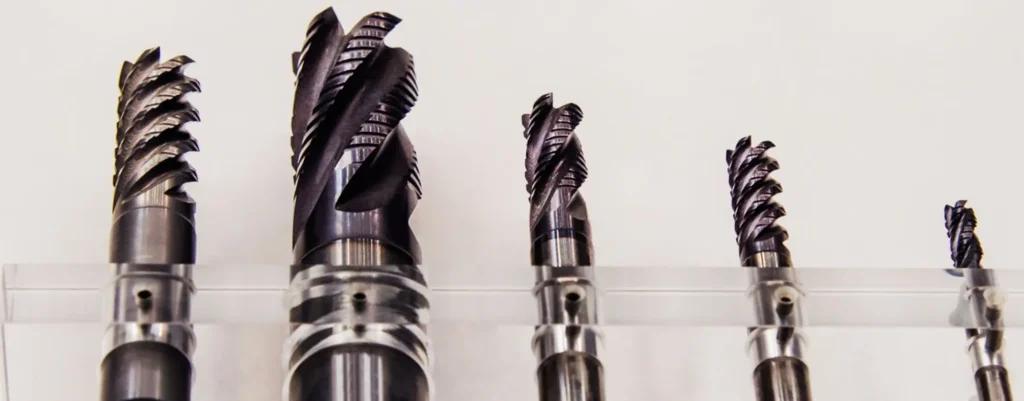
Flood cooling prevents chip re-welding and removes built-up edge (BUE). It is vital when machining carbon steels or stainless materials that generate sticky chips.
MQL (Minimum Quantity Lubrication) for Light Profiling
MQL systems spray a fine mist of oil onto the cutting area. They reduce friction while minimizing fluid waste—excellent for small-batch runs with moderate thermal loads.
Coolant Delivery and Chip Flow
Even the best cutter fails if the coolant doesn’t reach the cutting edge. For deep cavities, use internal coolant channels or angled nozzles to flush chips effectively. Combine this with polished flutes for smoother evacuation.
Maximizing HSS Cutter Life – Practical Best Practices
The life of an HSS cutter depends on process discipline. Always clamp tools short to prevent vibration. Even small runouts can reduce tool life greatly. Choose feed and depth carefully for every material. Never exceed 1.0×D depth for slotting. Use proper coolant or lubrication to cool the cutter, reduce heat buildup, and remove chips effectively. Dry cutting shortens life and dulls edges. Monitor wear before failure and regrind early. Regrinding restores geometry and saves cost. Always match substrate to workpiece hardness. For tough steels, cobalt or PM-HSS is ideal. Coatings such as TiAlN further reduce wear and increase cutting-edge stability. A consistent process equals longer tool life.
Hold the cutter as short as possible: Minimize stick-out to reduce bending and vibration.
Choose appropriate depth and feed: For slotting/profiling, limit depth of cut to ≤1.0×D; feed per tooth tuned for material, but may be lower than carbide.
Use coolant or flood lubrication: HSS cutters running dry risk edge softening and built-up edge; coolant cools, lubricates and carries away chips.
Monitor wear and regrind proactively: HSS tools should be reground before sudden edge failure; tracked wear improves consistency.
Match cutter substrate and coating to material: For tougher materials, choose cobalt-enriched HSS (HSS-Co) or PM-HSS; coatings bring further benefits in heat and wear resistance.
Optimize chip removal: Especially for slotting, make sure flute space and chip removal path are adequate; clogged flutes are a major life-limiting factor.
Ensure machine/holder rigidity: Using the best cutter won’t prevent failure if the spindle and fixture wobble; check run-out <0.01 mm and eliminate excess toolholder extension.
Case Example
A job shop producing small batches of hardened mould-steel components (HRC ~50) used a 10 mm diameter HSS endmill with 4 flutes, helix 30°, TiAlN coating, in a profiling operation. Initially, they ran with 0.5 mm axial depth, 0.2 mm side, 5000 rpm and fed 0.04 mm/tooth. Their average tool life was 25 parts. After implementing the best practices above—reducing stick-out, optimizing toolpath to constant engagement, improving coolant delivery and selecting a cobalt‐HSS grade—they improved tool life to 68 parts (nearly 3×), improved finish (Ra improved by 12 %) and reduced downtime for tool changes by 40%. This demonstrates how HSS cutters, when used thoughtfully, can outperform expectations in challenging applications.
Common Mistakes That Shorten HSS Cutter Life
- Running dry or with insufficient coolant leads to edge softening.
- Using too long a stick-out increases deflection and chatter.
- Wrong feed per tooth – rubbing instead of cutting accelerates wear.
- Ignoring tool wear signs – sudden breakage often follows visible edge rounding.
- Improper coating selection – TiN for aluminium, TiAlN for steel; mismatched coatings lead to poor adhesion.
Material Selection & Coating – The HSS Advantage
The substrate matters: M2 HSS remains a versatile choice, but for more demanding tasks such as tougher materials or higher speeds, cobalt-enriched HSS (M35/M42) or powder-metallurgy HSS are superior. As one summary explains: “HSS’s composition gives it exceptional strength, allowing tools to resist breaking or chipping under heavy loads or impact conditions.
Coating is another important layer of performance. PVD coatings such as TiN, TiAlN or AlTiN applied to HSS cutters enhance wear resistance, heat resistance, and reduce built-up edge. For instance, in the case example above, the TiAlN coating helped extend tool life and improve finish significantly.
Selecting the right HSS grade and coating changes tool performance greatly. M2 is best for general machining. For harder materials, M35 or M42 adds cobalt strength. Powder HSS grades offer even better wear and toughness. Coating improves surface hardness and heat control. TiN is great for low-speed operations. TiAlN or AlTiN suits higher speeds and dry cuts. The coating reduces friction and prevents chip welding. It also helps maintain edge sharpness under heat. Always match the coating to your material and cutting condition. With the right combination, HSS cutters can achieve performance close to carbide tools.
Future Outlook: HSS in the Era of Smart Machining
Even as carbide and ceramic tools dominate high-speed machining, HSS remains relevant, especially with modern enhancements:
- AI-driven toolpath optimization ensures constant engagement, reducing heat buildup.
- Advanced PVD coatings like AlCrN or TiSiN now make HSS competitive in high-temperature operations.
- Predictive maintenance systems can monitor tool wear and automatically schedule regrinds before failure.
Conclusion
Solid HSS milling cutters remain a highly practical option for slotting, profiling and finishing operations, particularly in mid-volume, multi-mix, easy-to-regrind manufacturing environments. The key to success lies not only in selecting the right cutter—geometry, substrate, coating, but also in matching process strategy: minimal stick-out, proper coolant, optimal toolpath and good machine/holder rigidity. When you apply those frameworks consistently, you unlock HSS cutter mastery, delivering performance, longevity and cost-effectiveness.
If you’re looking for recommendations tailored to your parts, materials or production volumes, we’d be happy to help you select the right HSS endmill program and material-coating-geometry combination.