


From Material to Lifespan: Unveiling the Competitive Edge of HSS Taps / Drills / Endmills
In the modern manufacturing environment, tool longevity is more than just a nice-to-have; it’s a critical success factor. Every minute of downtime caused by a failed tool, and every part scrapped due to poor quality, eats into profits. With the trio of cutters, taps, drills, and endmills, manufacturers often ask: “Why do some tools bow out after a few cycles while others keep going and going?” The answer lies in tracing the full chain: from the raw material of the tool (the substrate), through heat treatment and microstructure, to geometry and surface treatment, and finally to how the tool is used in your machining environment. In this article, we dive deep into how to engineer tools built with high-speed steel (HSS) that deliver remarkable lifespan and reliability.
Material & Metallurgy as the Core
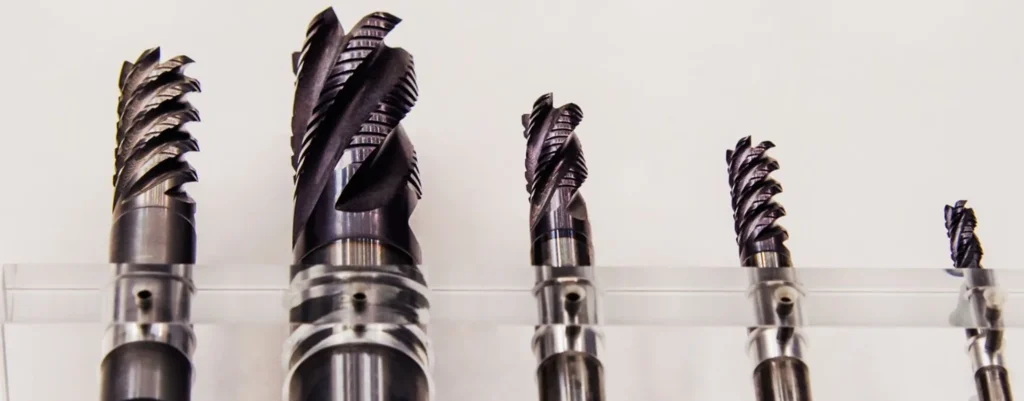
Alloy Composition & Carbide Engineering
The material foundation of any cutting tool defines its upper limit of performance. In HSS tool steels, the roles of alloying elements are vital:
Tungsten (W) and Molybdenum (Mo): These help form stable carbides that retain hardness at elevated temperatures, giving the tool its characteristic “red hardness.”
Vanadium (V): Highly effective at producing fine vanadium carbides, which significantly improve wear resistance.
Chromium (Cr): Adds rust resistance and contributes to hard carbide phases that resist abrasive wear.
Cobalt (Co): Raises hot-hardness and thermal strength, allowing higher cutting speeds before softening sets in.
But beyond mere composition, how these carbide particles distribute and bond in the matrix matters. Tools with fine, uniform carbide dispersion perform far better under load, because coarse carbides can act as crack initiation sites and lead to early failure.
Conventional HSS vs Powder-Metallurgy HSS (PM-HSS)
One major leap in HSS tool life comes from powder-metallurgy (PM) HSS. Research in aerospace-grade materials shows that PM-HSS cutters have a far more homogeneous microstructure, fewer internal defects, and better wear resistance. For example, a study showed that PM-HSS cutters, when milling titanium alloy, could operate at cutting speeds comparable to some uncoated carbide tools while still offering tool life benefits.
Thus, if tool life is a priority, investing in an upgraded HSS substrate pays off, provided the rest of the process supports it.
Role of Purity and Inclusion Control in HSS Steel
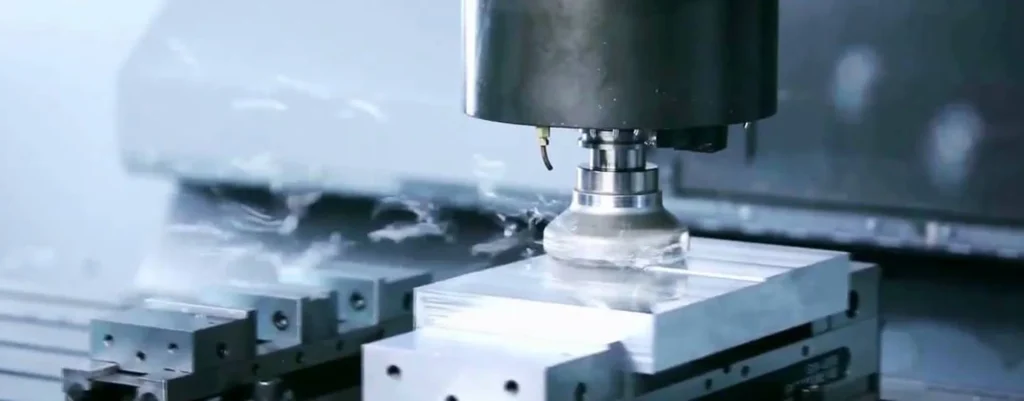
In HSS tool manufacturing, the cleanliness of the steel decides tool reliability. Non-metallic inclusions like oxides or sulfides act as weak zones. Under stress, these inclusions cause early microcracks and edge failure. Powder-metallurgy HSS reduces these flaws because powder atomization produces cleaner metal.
Modern refining steps like electroslag remelting (ESR) also enhance steel purity. Clean steel ensures stronger bonding between carbides and the steel matrix. This improves edge stability during continuous cutting. It also reduces micro-pitting on cutting edges. The result is longer tool life, better surface finish, and stable cutting performance even in high-load machining.
Heat Treatment & Microstructure Control
A top-grade HSS alloy is necessary but not sufficient. Heat treatment and microstructure control unlock the real potential.
Key Stages
Austenitizing: Heating the HSS alloy to its high-temperature phase, typically ~1200°C or higher for many grades, to dissolve carbides and prepare for rapid cooling.
Quenching: Rapid cooling (air, oil, or other media) transforms austenite into martensite, generating high hardness but also residual stress.
Tempering (multiple cycles): Reheating to a lower temperature to relieve stress and stabilize carbide phases. Without sufficient reheating, retained austenite may remain and cause dimensional instability or cracking.
Optional cryogenic treatment: Some advanced tools are subjected to −80°C to −196°C treatment to convert retained austenite to martensite and precipitate finer carbides. Studies show life increases of 40–120% in HSS tools via cryogenic processing.
Resulting Microstructure
An HSS tool with excellent treatment will exhibit:
Low retained austenite → better dimensional and hardness stability
Fine and well-distributed carbides → improved resistance to wear
Controlled residual stress profile → higher cracking resistance and longer endurance
Impact of Preheating Cycles on Hardness and Stability
Reheating cycles are critical for final tool hardness and toughness. Most HSS tools need two or three tempering stages. The first stage relieves internal stress. The next stage forms secondary carbides, improving wear resistance. Each stage must reach a precise temperature, often between 540°C and 560°C. Insufficient reheating causes retained austenite. Too much reheating causes softening.
Controlled tempering helps create stable hardness and high fatigue strength. It also improves dimensional stability in high-speed operations. In cutting tough alloys like stainless steel, this balanced hardness prevents sudden edge chipping. Consistent tempering ensures that drills, taps, and endmills hold tolerance over long runs.
Carbide Size and Distribution Control
The size and spread of carbides in HSS tools control how they resist wear and cracking. Fine and even carbides build a stable cutting edge that lasts longer. Coarse or uneven carbides weaken the matrix and form stress points. These microcracks can grow fast during cutting and cause tool chipping.
To control carbide size, powder metallurgy HSS (PM-HSS) is ideal. It refines the microstructure by spreading carbides evenly through the steel. It also reduces segregation and internal flaws. During heat treatment, proper temperature and cooling rate matter. Rapid quenching forms a fine martensitic matrix that locks carbides in place. Reheating cycles then stabilize hardness without softening.
Modern furnaces use controlled atmospheres to avoid decarburization. Some even use vacuum treatment for a perfect structure. These precise steps create a balanced tool—hard, tough, and stable under thermal load. The result is a tap, drill, or endmill that holds its edge longer, resists wear, and gives more consistent part quality.
Geometry & Edge Detail
Even the best substrate and heat treatment cannot overcome poor geometry or weak edge preparation—in taps, drills and endmills alike.
Edge sharpness, micro-geometry (small chamfers, micro-radii) reduce stress concentrations and delay chipping.
For drills: point geometry (118°, 135°, split point), web thickness, flute shape strongly affect centring, entry and chip evacuation.
For taps: lead/chamfer length, flute type (straight, spiral, spiral-point), entry section design determines how smoothly threads form, chips evacuate, and torque build is managed.
For endmills: flute count, helix angle, neck relief, corner radius,and tool-holder fit all influence stiffness, vibration and chip removal.
Poor geometry or edge prep often leads to early failure via chipping, deflection, or built-up edge. For HSS tools aiming for extended life, optimize geometry and edge quality as much as the substrate.
Edge Preparation Techniques
a. Micro-Chamfering and Honing
This reduces micro-cracks and delays edge failure.
b. Edge Radiusing
A small edge radius spreads cutting forces evenly and improves wear life.
c. Laser Edge Texturing
Laser-treated edges hold lubricant better and reduce built-up edge formation.
Edge Quality Inspection and Validation
After edge preparation, inspection ensures each tool meets standard geometry. Optical microscopes and laser scanners check chamfer width and radius uniformity. Even small edge defects can trigger premature tool wear. Surface roughness at the edge must stay below set limits to reduce friction.
Consistent edge prep improves tool consistency and process control. Many toolmakers now use 3D scanning for quality assurance. This helps verify edge texture, corner radius, and flute smoothness. Controlled edge validation gives repeatable performance across batches of HSS taps, drills, and endmills.
Surface Treatments & Coatings
After substrate and geometry, surface engineering provides the next major leap in performance.
Coatings such as TiN, TiCN, TiAlN, AlTiN, and DLC reduce friction, postpone wear and increase hot hardness.
Example: In drilling fly-ash geopolymer, researchers compared uncoated HSS, HSS-TiN and HSS-Co. They found HSS-Co produced the lowest flank wear and best surface finish.
The match between coating and substrate matters: A high-temp coating is only effective if the substrate (HSS grade) is capable of supporting it (e.g., cobalt-enriched HSS).
Surface modifications like nitriding or ion-implantation further strengthen the near-surface region, improving adhesive wear resistance and fatigue life.
Thus, layering an appropriate coating on a well-engineered HSS substrate extends tool life significantly.
Coating Adhesion and Thickness Optimization
a. Importance of Coating Bond Strength
Poor adhesion causes flaking and exposes the HSS substrate.
b. Ideal Coating Thickness Range
Most coatings perform best between 2–5 microns on HSS tools.
c. Surface Roughness Before Coating
Smooth, polished surfaces enhance coating grip and reduce delamination.
Operational Condition & Machining Strategy
Even the most premium tool will underperform if the machining strategy is weak.
Cutting Parameters
Speed, feed and depth of cut heavily impact tool life. Studies show that for HSS tools, increasing spindle speed, feed rate or depth of cut all significantly reduce tool life.
For example, typical safe cutting speeds for HSS tools in steel range ~60–100 m/min (200–330 SFM) according to standard speed/feeds tables.
Cooling & Chip Evacuation
Proper coolant/lubrication helps remove heat and chips. HSS tools are more vulnerable to heat-softening than carbide, so cooling is more critical.
Drill deep holes? Consider pecking, through-coolant or chip breaker designs.
Ensure chip evacuation paths remain clear—especially in taps, where chip-jamming means a rapid stop.
Machine & Toolholder Setup
Minimize tool stick-out and maximize rigidity. HSS is less stiff than carbide—excess overhang or machine chatter will shorten life.
Monitor tool-wear progression, edge rounding, chipping, and replace or regrind before catastrophic failure.
Coolant Type and Delivery Method
The right coolant type improves tool life drastically. For HSS tools, water-soluble oils or semi-synthetics balance lubrication and cooling. High-pressure coolant delivery removes chips fast and reduces heat buildup. Through-tool coolant holes in drills and endmills are ideal for deep-hole or high-feed operations. Consistent coolant flow avoids thermal shocks and micro-fractures. Always clean coolant paths to prevent blockage and uneven flow.
Comparative Lifespan Insights & Data
Here’s a simplified comparison based on studies and manufacturer data:
These data show that while HSS may not match carbide in every scenario, when engineered and applied correctly, it can deliver excellent value and life.
Real-World Application Examples”
Field data confirm HSS tools’ cost efficiency. In one test, TiN-coated HSS drills lasted 2.8× longer than uncoated ones in mild steel. PM-HSS endmills showed 35% higher tool life than standard HSS when machining tool steel. Regrinding restored 80% of performance, reducing total cost per hole.
These figures show that well-processed HSS tools can close the performance gap with carbide. Consistent tool management and periodic inspection further extend usable life. With proper maintenance, HSS tools can deliver durable cutting results in both manual and CNC operations.
Real-World Application Examples
a. Automotive Machining
HSS endmills cut valve seats and gears with precision and long life.
b. Aerospace Parts
PM-HSS drills handle tough alloys at a lower cost than carbide tools.
c. Mould and Die Industry
HSS taps and reamers maintain surface finish for tight tolerance cavities.
Recommendations for Maximizing Tool Life
Putting it all together, here are actionable recommendations:
Select the right substrate: For demanding tasks, use cobalt-HSS or PM-HSS; for general tasks, standard HSS may suffice.
Ensure proper heat-treatment and microstructure: Verify carbide distribution and residual stress management.
Optimize geometry and edge prep: Use sharp edges, correct chamfers, and coolant-friendly flute designs.
Match coating to substrate & application: High-temp coatings on capable substrates matter.
Control machining parameters: Keep speeds in HSS safe zone, manage feed/depth, avoid tool overheating.
Maintain machine/toolholder rigidity: Eliminate vibration, reduce tool overhang.
Monitor wear & define replacement criteria: Use flank wear, surface finish trends, chip formation as indicators.
Use cooling & chip evacuation: Especially in drilling/tapping scenarios.
Consider economic trade-offs: HSS often has a lower upfront cost but may require more frequent maintenance; in some cases, upgrading substrate/coating saves total cost per part.
Cost vs. Performance Analysis of HSS Tools
HSS tools are cheaper to buy and regrind. Carbide tools run faster but cost more upfront. The best value comes from balancing tool cost, lifespan, and regrindability. In small-batch jobs, HSS often wins due to flexibility and repair potential. Coated PM-HSS tools offer 2–4× longer life, narrowing the gap with carbide.
Users must calculate the total cost per component, not just the tool price. In many industries, optimized HSS tools deliver strong ROI while keeping quality high and downtime low.
Cost efficiency also depends on reconditioning cycles. HSS tools can be resharpened multiple times without losing integrity. Carbide tools, in contrast, often break before regrinding. This reusability reduces long-term cost. For small and mid-size workshops, HSS tools offer flexibility for varied materials and speeds.
Maintenance and regrinding services are widely available, adding convenience. When combined with coatings and optimized geometry, modern HSS tools give an impressive price-to-performance ratio. For industries with variable production volumes, they remain the most economical and sustainable solution. With ongoing advancements in PM-HSS, the gap with carbide continues to shrink.
Conclusion
The lifespan and performance of taps, drills and endmills made from HSS are not accidental; they are engineered. By starting with a high-quality substrate, applying precise heat treatment, optimizing geometry, adding appropriate coatings and controlling the machining environment, HSS tools can deliver competitive performance, lifespan and value. While carbide and other exotic materials have their place, HSS still has strong relevance, particularly in settings where flexibility, regrinding, cost-control and moderate run lengths are the rule. If you’re ready to elevate your tool strategy, start by looking inside: material → geometry → process. Your cutters will thank you.